Pet turf drainage is one of the most important—and most overlooked—factors when designing artificial grass relief zones for dogs and pets. While synthetic turf eliminates mud, dead grass, and constant lawn repairs, improper drainage can lead to odors, bacteria buildup, and soggy surfaces that defeat the purpose of going artificial.
Whether you’re building a backyard dog run, side-yard relief area, or commercial pet space, proper drainage design ensures urine and rinse water move away quickly—keeping the surface clean, dry, and odor-free. In this guide, we’ll cover the best drainage practices for pet turf, from base preparation to long-term maintenance.
Related Buy-Grass.com resources:
Pet Artificial Grass |
Artificial Grass Installation |
Artificial Grass Drainage
Helpful references:
American Veterinary Medical Association (Pet Health & Hygiene) |
U.S. Environmental Protection Agency (Water & Waste Guidance)
What You’ll Learn
- Why drainage is critical for pet relief turf areas
- Base materials that promote fast urine and water flow
- Proper slopes and grading for pet turf drainage
- When to use drains, gravel layers, or permeable bases
- Odor-control strategies tied to drainage performance
- Maintenance tips to keep pet turf sanitary
Why Drainage Matters in Pet Relief Zones
Pet relief areas are exposed to concentrated urine in the same locations day after day. Without effective pet turf drainage, moisture can pool beneath the turf, leading to ammonia odors, bacteria growth, and an unpleasant surface for both pets and people.
Unlike rainwater alone, pet urine contains salts and organic compounds that must be flushed away. Drainage isn’t just about moving water—it’s about removing waste efficiently and consistently.
Problems caused by poor drainage
- Lingering urine odors
- Wet or spongy turf underfoot
- Bacteria buildup beneath the turf
- Premature turf backing deterioration
Start with the Right Base Materials
The foundation of effective pet turf drainage starts below the surface. A well-designed base allows liquids to pass through quickly instead of sitting beneath the turf.
Recommended base materials
- Crushed stone or decomposed granite: Provides stability and permeability.
- Clean class II base: Compacts well while still allowing drainage.
- Washed gravel layers: Used in high-use pet zones for maximum flow-through.
Base layers should be compacted evenly to prevent low spots where liquid can collect.
Proper Grading and Slope for Pet Turf
Even the best base materials won’t work if water and urine don’t have somewhere to go. Proper grading is a core principle of pet turf drainage.
Best grading practices
- Slope turf slightly away from structures (typically 1–2%)
- Avoid flat areas where liquids can pool
- Direct flow toward drains, gravel bands, or yard edges
Subtle slopes are usually invisible once installed but make a dramatic difference in performance.
Choosing Turf with Permeable Backing
Not all artificial grass products are ideal for pet relief zones. For proper pet turf drainage, choose turf with high-permeability backing systems.
What to look for in pet turf
- Fully permeable or flow-through backing
- High drain-hole density
- Durable backing that resists moisture breakdown
- Short-to-medium pile height for easier rinsing
These features allow liquids to pass through quickly and into the base below.
When to Use Additional Drainage Systems
In some pet relief zones—especially high-use or confined spaces—additional drainage components may be needed.
Drainage upgrades to consider
- French drains: Ideal for side yards and narrow runs.
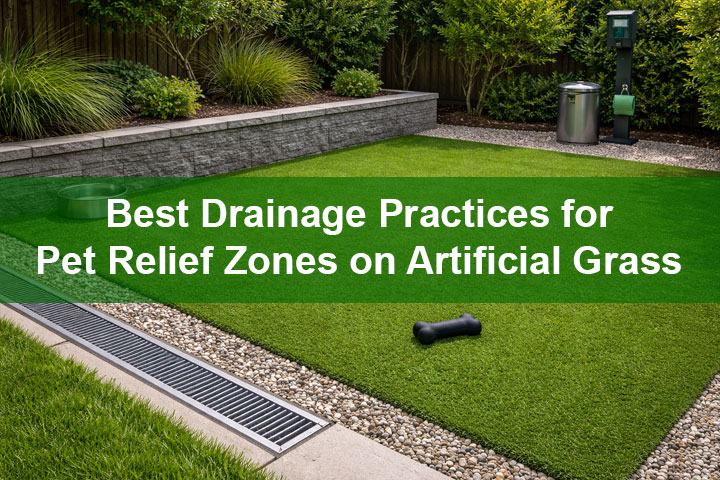
- Channel drains: Useful where turf meets patios or hardscapes.
- Gravel borders: Help intercept runoff and flush edges.
These systems are especially valuable in areas with clay soil, heavy rainfall, or multiple dogs using the same space.
For more details, see:
Artificial Grass Drainage.
Infill Choices and Odor Control
Drainage and odor control go hand in hand. The right infill supports pet turf drainage by preventing moisture retention near the surface.
Pet-friendly infill options
- Antimicrobial infills
- Zeolite-based infills for odor absorption
- Low-dust silica blends designed for pets
Avoid infills that trap moisture or break down over time in pet environments.
Rinsing and Cleaning: Part of the Drainage System
Routine rinsing is essential for maintaining clean pet relief zones. Effective pet turf drainage ensures rinse water carries urine residue away instead of pooling.
Best rinsing practices
- Rinse high-use areas several times per week
- Use mild enzyme cleaners as needed
- Flush edges and corners where buildup occurs
A well-draining system makes rinsing quick and effective.
Common Pet Turf Drainage Mistakes
Mistake: Installing turf on native soil only
Fix: Always install a compacted, permeable base layer.
Mistake: Flat installations with no slope
Fix: Add subtle grading to direct liquid flow.
Mistake: Using non-permeable turf backing
Fix: Select turf designed specifically for pet use.
Mistake: Ignoring edges and corners
Fix: Reinforce drainage along borders and high-use zones.
Maintenance Tips for Long-Term Performance
Even the best-designed pet turf drainage system benefits from regular maintenance:
- Brush turf to keep fibers upright
- Rinse regularly to flush urine
- Inspect drains and edges periodically
- Refresh infill as needed
These simple steps keep pet relief zones hygienic and pleasant.
Final Thoughts
Drainage is the backbone of successful pet relief zones on artificial grass. With proper base materials, grading, permeable turf, and routine rinsing, pet turf drainage prevents odors, improves cleanliness, and extends the life of your installation.
Whether for a single dog or a high-use pet area, investing in drainage upfront ensures your turf stays fresh, functional, and pet-friendly year-round.
Design a Cleaner, Odor-Free Pet Turf Area
Buy-Grass.com specializes in artificial grass systems designed for pets, with drainage solutions that keep relief zones clean and dry. Let our team help you build a turf system that works for your pets—and your home.