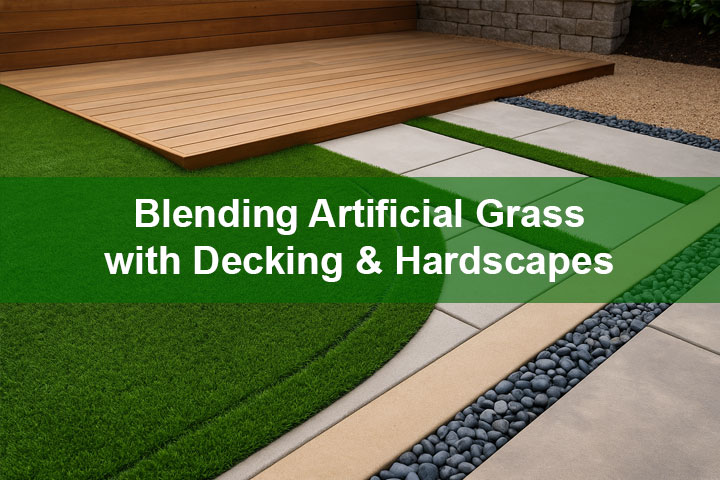
Turf and hardscape design is where outdoor spaces go from “nice” to “finished.” When you blend artificial grass with decking, pavers, concrete, stone, or gravel, you get the best of both worlds: a soft, green surface for comfort and play—plus durable hardscape zones for dining, grilling, and heavy foot traffic. The key is making the transitions look intentional and building the base and edging so everything stays level, drains properly, and holds up for years.
In this guide, we’ll walk through layout planning, transition styles, edging options, base and drainage best practices, and maintenance tips—so your turf integrates cleanly with decks and hardscape features instead of looking like an “add-on.”
Related Buy-Grass.com resources:
Artificial Grass Installation |
Artificial Grass Drainage |
Putting Green Installation
Helpful references:
Interlocking Concrete Pavement Institute (ICPI) |
USDA National Agricultural Library (landscape resources)
What You’ll Learn
- How to plan a cohesive turf and hardscape layout (zones, flow, and focal points)
- Best transition styles: turf to decking, turf to pavers, turf to gravel, and more
- Edging options that keep lines crisp and prevent shifting over time
- Base prep and drainage tips that prevent puddles and settling at seams
- Material and color pairing ideas that make a yard look “designed”
- Maintenance tips to keep turf and hardscape looking sharp year-round
Why Blending Artificial Grass with Hardscape Works So Well
Artificial grass delivers a clean “green carpet” look without watering, mud, or patchiness. Hardscapes—like decks, patios, and pavers—deliver structure and function. Together, they create contrast: soft vs. solid, organic vs. geometric. That contrast is what makes outdoor spaces feel intentional.
From a practical standpoint, hardscape zones handle furniture legs, grills, outdoor kitchens, and high traffic. Turf zones handle lounging, play, pets, or simply “resting the eye” with a tidy lawn look. The goal is to integrate both so the transitions are clean, safe, and durable.
Start with a Turf and Hardscape Layout Plan
Before any digging or ordering materials, sketch your yard like a simple floorplan. Think in “rooms” and movement paths:
- Entry + walk paths: How will people move from doors to seating, grills, gates, or side yards?
- Living + dining zones: Decking or pavers typically anchor furniture and shade structures.
- Open turf zone: A play lawn, pet area, putting green, or just a clean central green space.
- Planting zones: Beds and planters soften edges and add color/height.
Design tip: A perfect rectangle of turf can look “installed.” A turf shape with at least one curve, angle, or wrap-around edge (around a deck corner, planter, or paver pad) tends to look more natural and custom.
Transition Options: How to Blend Turf and Hardscape Like a Pro
1) Artificial Grass to Decking
Decking pairs beautifully with turf because wood tones warm up the space, and turf keeps the surrounding area green and low-maintenance. The detail that matters most is the seam where turf meets the deck edge.
- Best look: Turf finishing slightly below the deck edge so it doesn’t “lip” up.
- Best practice: Use a solid perimeter edge (composite bender board, steel edging, or a mow strip) to keep the turf tight at the deck line.
- Drainage note: Avoid low spots that trap water against the deck framing. Grade turf away from structures.
2) Artificial Grass to Pavers
This is one of the cleanest modern blends. You can do a patio that borders turf, a walkway that cuts through turf, or a paver grid with turf joints.
- Modern favorite: Large-format concrete pavers with turf strips between joints.
- Install note: Both the paver base and turf base must be properly compacted so they don’t settle at different rates.
- Edging note: Use paver restraints plus turf edging so both materials hold their line.
3) Artificial Grass to Concrete
Concrete is durable and easy to maintain—great for grill pads, door landings, and side yards. Turf next to concrete looks best when the edge is perfectly straight and finished clean.
- Pro upgrade: A concrete mow strip between turf and planting beds helps keep edges crisp long-term.
- Trip hazard prevention: Keep finished turf height about 1/4 inch below the concrete edge.
4) Artificial Grass to Gravel or Decomposed Granite (DG)
DG and gravel add texture, improve drainage, and create a drought-friendly aesthetic. The key challenge is migration—small stones can travel onto turf over time.
- Best practice: Always use a physical separator (steel edging, bender board, or mow strip).
- Design idea: Use gravel as a 6–12 inch “border band” between turf and planters for drainage + visual contrast.
5) Artificial Grass to Natural Stone
Flagstone and natural stone create a high-end, organic look. Turf next to stone can look surprisingly realistic when the cuts are tight and the stone is stable.
- Best look: Tight-cut turf hugging the stone perimeter with clean edging support underneath.
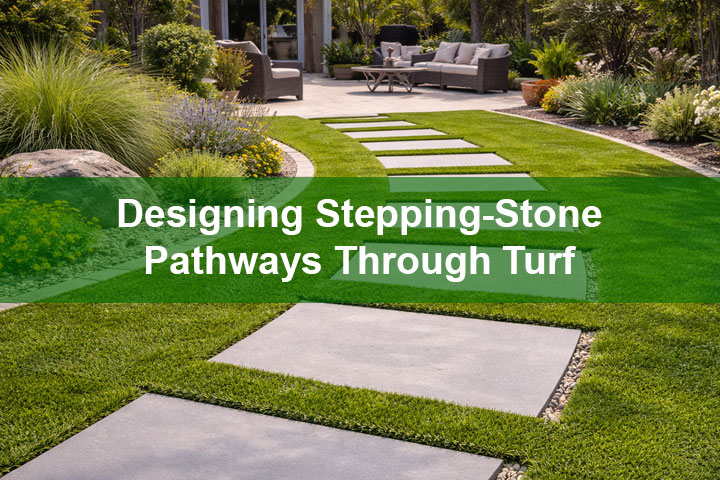
- Common use: Stepping stones set into turf for paths to fire pits, pergolas, or side gates.
Edging: The Detail That Makes Turf and Hardscape Look “Finished”
If your turf and hardscape project has one “don’t skip this” step, it’s edging. Edging creates crisp lines, prevents lifting, stops gravel migration, and keeps transitions safe.
Top edging options
- Concrete mow strip: Most permanent, cleanest edge, ideal next to turf and hardscape borders.
- Steel edging: Sleek modern look, great for curves, strong restraint for gravel and DG.
- Composite/bender board: Budget-friendly and flexible for curves and planter borders.
- Paver border course: A “soldier course” paver row that doubles as a design feature and restraint.
Height tip: The finished turf surface should typically sit slightly below adjacent hardscape so water sheds and feet/wheels don’t catch edges.
Base Prep and Drainage for Turf and Hardscape Transitions
Most long-term problems show up at seams: where turf meets pavers, where decking meets turf, or where concrete drains toward a low spot. Good base prep prevents shifting, puddles, and uneven surfaces.
Key principles
- Compact in layers: Whether it’s paver base or turf base, compact in lifts to prevent settling.
- Match finished grades: Plan your sub-base depths so turf + infill align correctly with pavers/decks.
- Plan slope: A gentle slope away from structures helps prevent water pooling at edges.
Drainage upgrades when needed
- French drains: Useful for low spots or areas that naturally collect water.
- Channel drains: Great between patio edges and turf zones if runoff is heavy.
- Permeable bands: Gravel borders can act as a buffer and help move water away from turf seams.
If drainage is a concern, start here: Artificial Grass Drainage.
Material and Color Pairing Tips
The fastest way to make an outdoor space feel cohesive is to repeat materials and keep a tight palette. Turf is your “green anchor,” so let hardscape tones support it.
- Repeat colors: If your deck is warm-toned, echo that warmth in planter caps, gravel tones, or outdoor furniture.
- Limit textures: Aim for 2–3 main materials (turf + one primary hardscape + one accent like gravel or DG).
- Use borders: Gravel or stone bands can “frame” turf and make edges look intentional.
- Add lighting: Path lights along pavers and subtle uplights in planters make turf look premium at night.
Common Mistakes (and How to Avoid Them)
Mistake: No separator between turf and gravel
Fix: Add steel edging, bender board, or a concrete strip to prevent stone migration.
Mistake: Turf sits too high next to pavers or concrete
Fix: Adjust base depth so turf finishes slightly below the hardscape edge.
Mistake: Poor grading at the seam
Fix: Grade away from structures and consider drains or permeable borders where runoff concentrates.
Mistake: Too many materials competing
Fix: Simplify. Repeat the same paver or gravel in multiple zones rather than adding new textures everywhere.
Maintenance: Keeping Turf and Hardscape Looking Sharp
One major benefit of combining turf and hardscape is low maintenance, but a little routine care keeps everything photo-ready:
- Blow debris off weekly: Leaves and dust collect along edges and corners.
- Rinse occasionally: Especially in dry climates to reduce dust and keep turf fibers clean.
- Brush high-traffic areas: Around patios and walk paths, fibers can lay down over time.
- Sweep hardscapes: Prevent dirt and gravel from building up at turf seams.
Quick Inspiration Layouts
- Deck + turf “green rug”: Deck for dining, turf as the surrounding lounge/play zone.
- Paver grid + turf joints: Modern courtyard look with large pavers and turf between.
- Concrete patio + gravel border + turf: Clean edge plus a functional drainage buffer.
- Side yard utility run: Turf with stepping pads—no mud path to the gate or bins.
Final Thoughts
A great turf and hardscape blend comes down to three things: layout, clean transitions, and solid base prep. When those are done right, artificial grass doesn’t look “installed”—it looks like it was always meant to be part of the space.
Plan a Clean Turf + Hardscape Transition
Want your artificial grass to blend perfectly with decking, pavers, or gravel? Buy-Grass.com can help you choose the right turf, edging, and base approach for a clean, long-lasting finish.