Creative Edging & Borders to Frame Your Artificial Lawn
Artificial lawn edging is the detail that separates a “nice turf install” from a truly finished outdoor space. While artificial grass delivers a clean, low-maintenance green surface, edging and borders are what define its shape, protect its perimeter, and visually tie it into surrounding hardscapes and landscaping.
From sleek modern steel borders to natural stone frames and decorative gravel bands, the right edging choice improves durability, drainage, and curb appeal. In this guide, we’ll explore creative edging options, design tips, and best practices for framing your artificial lawn the right way.
Related Buy-Grass.com resources:
Artificial Grass Installation |
Artificial Grass Drainage |
Residential Artificial Grass
Helpful references:
National Association of Landscape Professionals |
Interlocking Concrete Pavement Institute (ICPI)
What You’ll Learn
- Why artificial lawn edging is essential for performance and aesthetics
- Popular edging materials and when to use each
- Creative border ideas to elevate turf design
- Drainage and base considerations at lawn edges
- Common edging mistakes and how to avoid them
- Maintenance tips for long-lasting turf borders
Why Artificial Lawn Edging Matters
Edging does far more than outline your turf. Proper artificial lawn edging helps lock the turf in place, prevents lifting or curling, and keeps infill, soil, and gravel from migrating onto the surface.
From a design perspective, edging gives your lawn definition. It frames the green surface the same way a mat frames a piece of art—directing the eye and reinforcing intentional design.
Key benefits of proper turf edging
- Prevents turf movement and edge fraying
- Improves drainage control at borders
- Creates clean transitions to hardscape and planting beds
- Enhances long-term durability and appearance
Popular Materials for Artificial Lawn Edging
Concrete Edging (Mow Strips)
Concrete edging is one of the most durable options for framing artificial turf. Often poured as a narrow “mow strip,” it creates a crisp, permanent border that resists movement.
- Ideal for straight edges and modern designs
- Excellent next to pavers, patios, and walkways
- Helps prevent soil and mulch migration
Steel or Aluminum Edging
Metal edging delivers a sleek, contemporary look while offering strong structural support. It’s especially useful for curved turf designs.
- Great for modern and minimalist landscapes
- Flexible for curves and organic shapes
- Strong restraint for gravel and decomposed granite
Paver or Brick Borders
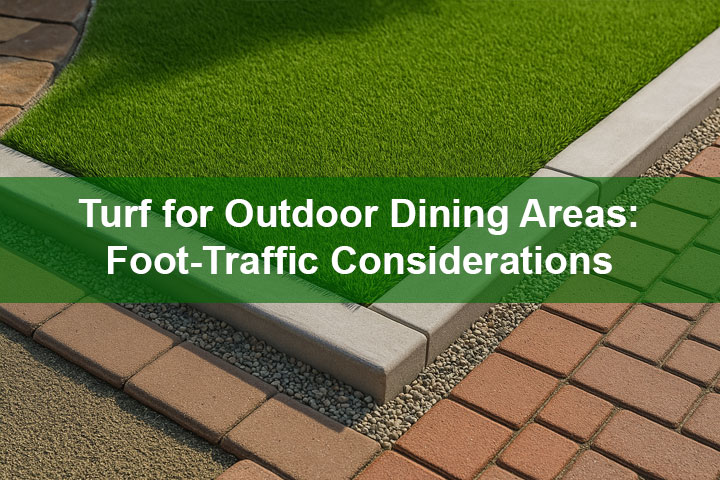
Pavers and bricks can act as both edging and design features. A single row of pavers (often called a soldier course) neatly frames the turf while visually tying it to nearby hardscape.
- Blends turf seamlessly with patios and paths
- Available in many colors and textures
- Requires proper base prep to prevent settling
Natural Stone Edging
Flagstone and natural stone create an organic, high-end look. When paired with artificial grass, stone edging softens transitions and adds visual interest.
- Perfect for rustic or natural landscape designs
- Pairs well with planting beds and boulders
- Best installed with solid base support
Composite or Plastic Bender Board
Bender board is a cost-effective, flexible option commonly used around curves, planting beds, and garden borders.
- Budget-friendly and easy to shape
- Best for light-duty borders
- May require reinforcement over time
Creative Border Ideas to Elevate Your Turf Design
Gravel or Decomposed Granite Bands
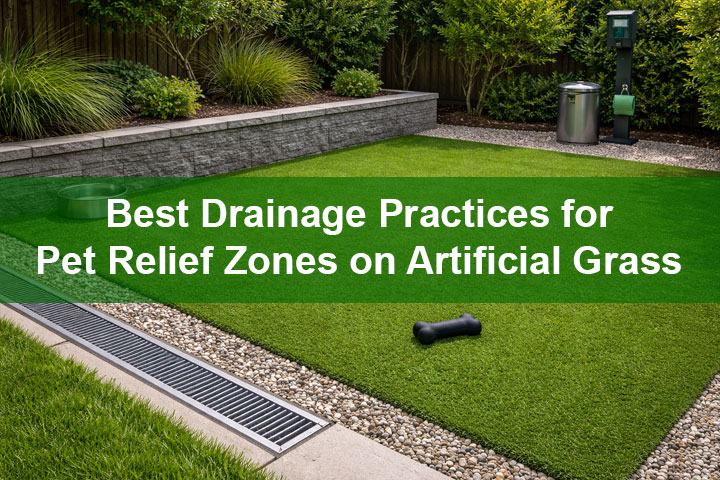
A gravel border between turf and planting beds adds texture, improves drainage, and creates a strong visual frame.
- Use 6–12 inch bands for best effect
- Pair with steel or concrete edging to prevent migration
Mixed-Material Borders
Combining materials—such as concrete edging with gravel or stone—adds depth and interest to your artificial lawn edging.
Raised Planter Frames
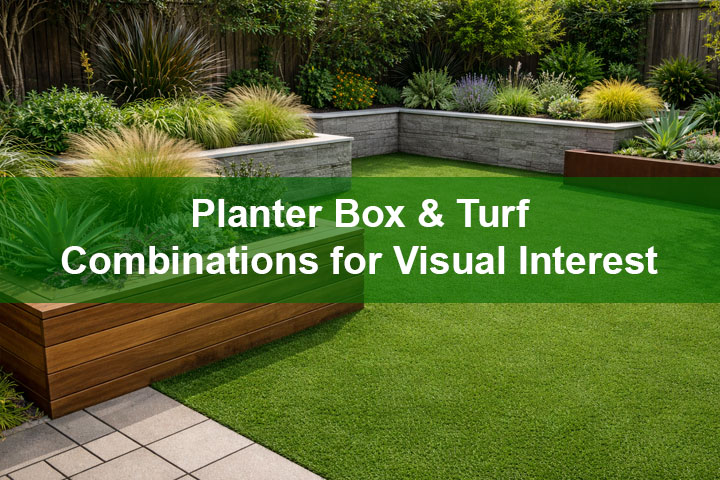
Raised planters built from block, wood, or steel can double as turf borders while adding height and dimension.
Stepping Stone Transitions
Stepping stones set flush with turf edges guide foot traffic and reduce wear while creating a playful, functional design.
Edging and Drainage: Planning the Border Zone
Drainage issues often appear at the perimeter of turf installations. Proper artificial lawn edging helps manage water flow and protects the base.
- Grade turf slightly away from structures
- Use permeable borders like gravel where water collects
- Consider French or channel drains in low areas
For a deeper dive, see our guide on Artificial Grass Drainage.
Common Edging Mistakes (and How to Avoid Them)
Mistake: No physical edge restraint
Fix: Always install a solid border—especially next to gravel, mulch, or soil.
Mistake: Turf installed higher than the edge
Fix: Finish turf about 1/4 inch below hardscape or edging surfaces.
Mistake: Poor base preparation
Fix: Compact base materials properly and match heights across surfaces.
Maintenance Tips for Artificial Lawn Edging
Well-installed borders require minimal upkeep, but a little attention keeps them looking sharp:
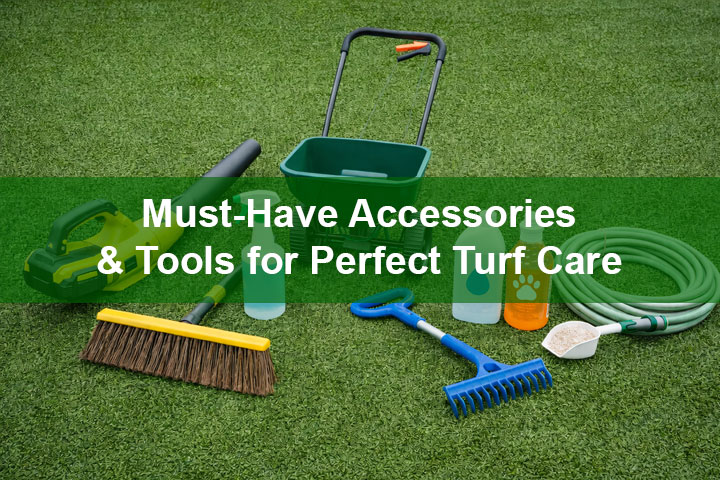
- Blow debris away from edges regularly
- Sweep gravel borders to maintain clean lines
- Inspect edging annually for movement or settling
- Brush turf edges to keep fibers upright
Choosing the Right Edging for Your Lawn
The best artificial lawn edging depends on your design style, budget, and surrounding materials. Modern spaces often favor steel or concrete, while natural landscapes benefit from stone and gravel combinations.
Think of edging as both a functional requirement and a design opportunity—it’s your chance to frame the lawn and make it feel intentional.
Final Thoughts
Creative edging and borders give artificial lawns structure, protection, and polish. When done right, artificial lawn edging enhances drainage, prevents movement, and visually anchors your turf within the broader landscape.
Whether you prefer crisp modern lines or organic natural transitions, the right border solution will keep your lawn looking sharp for years to come.
Frame Your Artificial Lawn the Right Way
Buy-Grass.com helps homeowners and designers choose the best turf edging solutions for long-lasting, professional results. From base prep to border materials, we’ll help you get the details right.