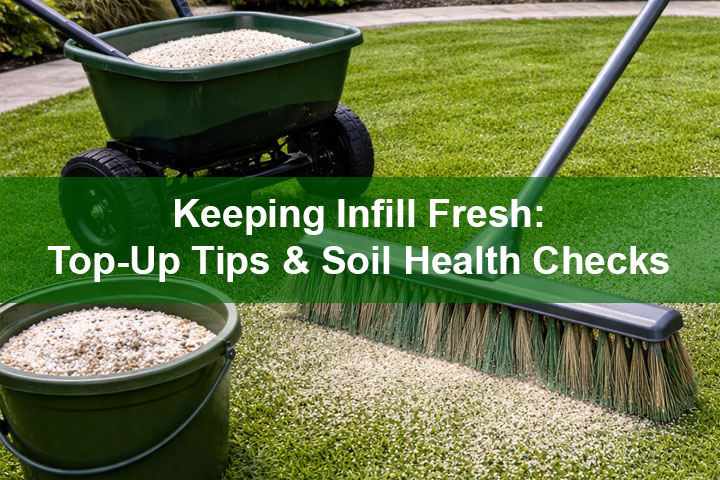
Keeping Infill Fresh: Top-Up Tips & Soil Health Checks
Turf infill maintenance is one of the most important steps in keeping artificial grass looking upright, draining properly, and performing like new. While synthetic turf fibers provide the visible green surface, infill is what supports the blades, stabilizes the backing, and helps with drainage and odor control.
Over time, foot traffic, pets, weather, and routine cleaning can redistribute or reduce infill levels. In this guide, we’ll explain how to know when it’s time for a top-up, how to maintain healthy drainage beneath your turf, and what soil or base checks you should perform to protect your investment.
Related Buy-Grass.com resources:
Artificial Grass Installation |
Artificial Grass Drainage |
Pet Artificial Grass
Helpful references:
National Association of Landscape Professionals
|
EPA Soil & Drainage Resources
What You’ll Learn
- What infill does and why turf infill maintenance matters
- Signs your artificial grass needs an infill top-up
- How to measure proper infill depth
- Pet-specific infill maintenance tips
- How to check base and soil health beneath turf
- Common infill mistakes to avoid
What Is Infill and Why Is It Important?
Infill consists of small granules—often silica sand, coated sand, or specialty pet infill—brushed into artificial grass after installation. Proper turf infill maintenance ensures these granules continue to perform essential functions:
- Keep turf blades upright
- Add weight and stability to the system
- Improve drainage flow
- Provide cushioning underfoot
- Support odor control in pet areas
Without adequate infill, turf fibers can flatten prematurely and drainage performance may decline.
How to Tell If Your Turf Needs an Infill Top-Up
Over time, infill can shift or compact. Regular turf infill maintenance helps you catch issues early.
Common signs of low infill
- Flattened or matted turf blades
- Visible backing when you part the fibers
- Uneven surface feel underfoot
- Reduced drainage speed after rinsing
If you can easily see the backing layer when spreading fibers apart, it’s likely time for an infill top-up.
How Much Infill Should You Have?
Proper infill depth depends on turf pile height and product specifications. As a general rule:
- Infill should cover roughly 50–70% of the blade height
- Fiber tips should remain visible above the infill layer
- Infill should feel evenly distributed when walking across the surface
Always follow manufacturer guidelines when performing turf infill maintenance.
How to Perform an Infill Top-Up
Topping up infill is straightforward when done carefully.
Step-by-step top-up process
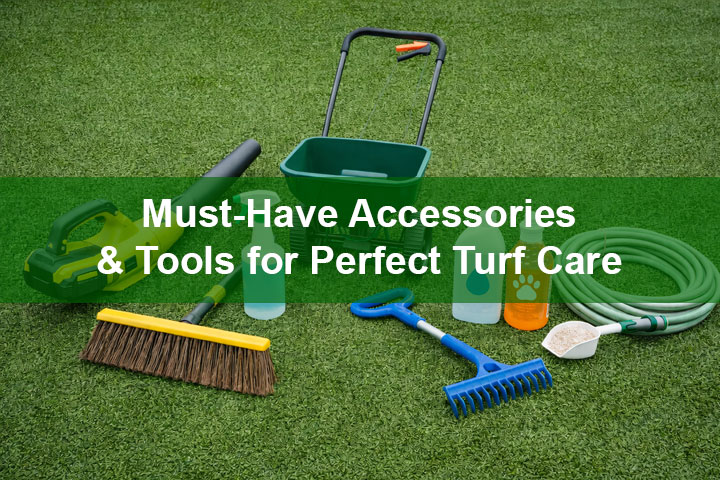
- Remove debris with a blower.
- Brush turf fibers upright using a stiff push broom.
- Spread infill evenly using a drop spreader.
- Brush against the grain to work infill into the base.
- Repeat until desired depth is reached.
Light, gradual additions are better than overfilling in one pass.
Pet Areas Require Extra Attention
Pet relief zones often require more frequent turf infill maintenance due to concentrated use and rinsing.
Pet-specific tips
- Use antimicrobial or zeolite-based infill options
- Rinse regularly to prevent buildup
- Inspect high-use zones monthly
- Top up infill more frequently in relief areas
Consistent maintenance prevents odor retention and supports long-term hygiene.
Checking Base & Soil Health Beneath Turf
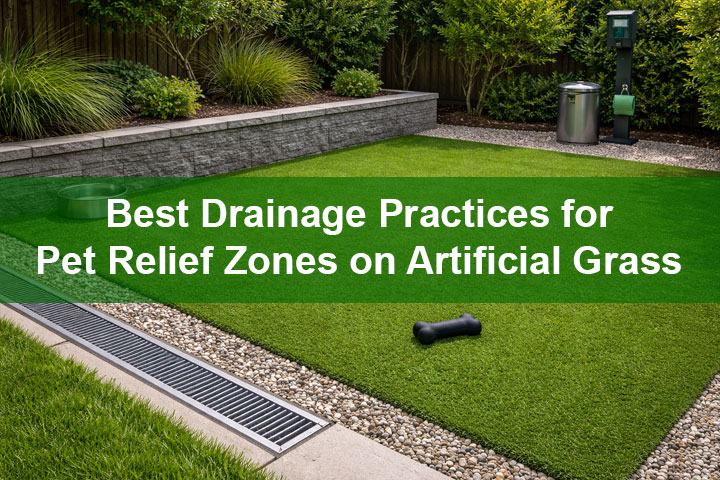
While artificial grass does not rely on natural soil health the way real grass does, the base layer beneath turf plays a crucial role in performance.
Part of smart turf infill maintenance includes periodic checks of drainage and compaction.
Signs of base or drainage issues
- Water pooling after heavy rain
- Soft or spongy areas underfoot
- Persistent odor in certain spots
- Uneven settling or depressions
If you notice these signs, the base may need re-compaction or improved drainage layers.
Learn more here:
Artificial Grass Drainage.
Seasonal Infill Maintenance Tips
Spring
- Inspect for winter compaction
- Refresh infill in high-traffic areas
Summer
- Brush fibers upright regularly
- Rinse more often in pet zones
Fall
- Remove leaves promptly
- Check for infill displacement from storms
Winter
- Avoid metal shovels
- Inspect edges and drainage points
Common Infill Mistakes to Avoid
Mistake: Overfilling
Fix: Keep blade tips visible above the infill layer.
Mistake: Ignoring high-traffic zones
Fix: Spot-check areas where people or pets walk most.
Mistake: Using incompatible infill types
Fix: Match new infill to your existing material.
Mistake: Skipping brushing after top-up
Fix: Always brush to evenly distribute granules.
How Often Should You Perform Turf Infill Maintenance?
Most residential lawns benefit from a light inspection every 3–6 months. Pet areas may require monthly checks.
- Low-traffic lawns: Annual inspection
- Active family yards: Biannual inspection
- Pet relief zones: Monthly spot checks
- Commercial spaces: Quarterly professional review
Final Thoughts
Artificial turf is durable, but it performs best when supported by consistent turf infill maintenance. Regular top-ups, brushing, and drainage checks ensure your lawn stays upright, clean, and well-draining.
By investing a little time in infill care and base inspections, you protect your turf’s longevity—and keep it looking like the day it was installed.
Keep Your Turf Performing Like New
Buy-Grass.com offers premium artificial grass systems designed for long-term durability. Need help selecting the right infill—or refreshing your existing turf? Our experts are here to help.