A rooftop garden with synthetic grass is one of the most practical ways to transform unused roof space into a vibrant urban oasis. By combining artificial turf with raised planter beds, containers, and lightweight garden systems, homeowners and apartment dwellers can create productive herb and vegetable gardens while maintaining a clean, comfortable surface.
Synthetic grass provides a mud-free, durable base for planters while helping define walking paths and relaxation areas. In this guide, we’ll explore how to design rooftop herb and veggie gardens using artificial turf, including drainage considerations, planter selection, weight management, and layout ideas for small spaces.
Related Buy-Grass.com resources:
Residential Artificial Grass |
Artificial Grass Installation |
Artificial Grass Drainage
Helpful references:
EPA Green Infrastructure |
U.S. Green Building Council
What You’ll Learn
- Why synthetic grass works well for rooftop gardens
- How to design planter layouts for herbs and vegetables
- Weight and structural considerations for rooftops
- Drainage strategies for rooftop turf installations
- Plant selection for sunny rooftop environments
- Maintenance tips for healthy rooftop garden systems
Why Synthetic Grass Works Well on Rooftops
Traditional rooftop gardens often rely on decking, gravel, or tile surfaces. A rooftop garden with synthetic grass offers a softer, greener alternative while still maintaining durability.
- Creates a natural garden aesthetic
- Provides comfortable walking surfaces
- Reduces dust and debris compared to gravel
- Requires minimal maintenance
- Handles foot traffic well around planter beds
Artificial turf also helps define walkways between garden areas while preventing muddy surfaces when watering plants.
Planning Your Rooftop Garden Layout
Designing a rooftop garden begins with careful planning. A balanced layout ensures both plant productivity and comfortable movement through the space.
Common layout elements
- Raised herb planter boxes
- Vegetable container gardens
- Artificial turf walking paths
- Seating or relaxation zones
- Decorative trellises or vertical gardens
Combining these elements helps create a rooftop garden with synthetic grass that feels both productive and inviting.
Weight & Structural Considerations
Before installing any rooftop garden, it’s essential to confirm that the structure can support the added weight of planters, soil, and irrigation systems.
Important factors
- Weight of soil-filled containers
- Water retention in planters
- Artificial turf and base materials
- Furniture or garden structures
Consulting a structural engineer or building manager is recommended for large rooftop gardens.
Choosing the Right Planters
Lightweight containers work best for rooftop herb and vegetable gardens.
Popular planter options
- Fiberglass planter boxes
- Wood planter beds with liners
- Fabric grow bags
- Modular raised garden systems
Planters should include drainage holes to prevent water buildup and protect the turf below.
Drainage Considerations for Rooftop Turf
Proper drainage is essential when installing artificial turf on rooftops. A rooftop garden with synthetic grass should allow water to flow easily toward roof drains.
Drainage best practices
- Use permeable turf backing
- Install a lightweight drainage mat beneath turf
- Avoid blocking roof drain pathways
- Maintain slight grading toward drains
For more information, visit:
Artificial Grass Drainage
Best Herbs for Rooftop Gardens
Herbs thrive in sunny rooftop environments and are perfect for container gardening.
Great rooftop herb options
- Basil
- Rosemary
- Thyme
- Mint
- Parsley
- Chives
These plants require relatively small containers and grow well in full sun.
Vegetables That Thrive in Containers
Many vegetables adapt well to rooftop planters when given proper soil depth and sunlight.
Container-friendly vegetables
- Cherry tomatoes
- Peppers
- Lettuce and leafy greens
- Radishes
- Spinach
- Green onions
Raised containers also make harvesting easier while protecting plants from pests.
Creating Comfortable Garden Walkways
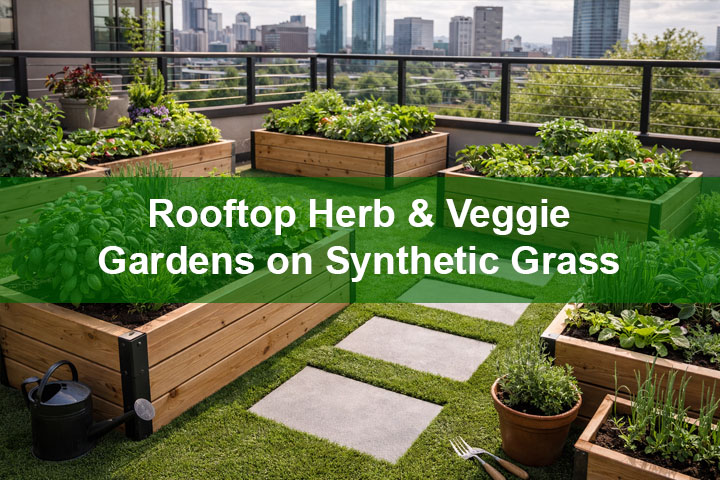
Artificial turf works beautifully as the walking surface between planter boxes.
A rooftop garden with synthetic grass allows gardeners to move comfortably between beds while maintaining a clean environment.
- Define walking paths between planters
- Install stepping stones for visual interest
- Create lounge areas for relaxing in the garden
Maintenance Tips for Rooftop Turf Gardens
Maintaining a rooftop garden with synthetic grass is relatively simple.
- Blow away soil spills from planting
- Rinse turf occasionally after watering
- Inspect planters for drainage overflow
- Brush turf fibers upright periodically
These simple steps keep the rooftop space clean and inviting.
Common Rooftop Garden Mistakes
Mistake: Blocking drainage areas
Fix: Always leave access to roof drains.
Mistake: Overloading the roof structure
Fix: Use lightweight planter systems.
Mistake: Poor pathway planning
Fix: Design clear walking routes through the garden.
Final Thoughts
A thoughtfully designed rooftop garden with synthetic grass allows urban homeowners to grow fresh herbs and vegetables while enjoying a comfortable outdoor space. By combining artificial turf with raised planters and lightweight containers, you can create a productive garden that remains clean, durable, and visually appealing.
With the right layout and proper drainage planning, rooftop gardens can transform unused space into a relaxing and sustainable urban retreat.

Build a Rooftop Garden That Thrives
Buy-Grass.com helps homeowners and designers create beautiful artificial grass installations for rooftops, patios, and urban landscapes. Our experts can help you choose turf systems that support both comfort and garden functionality.