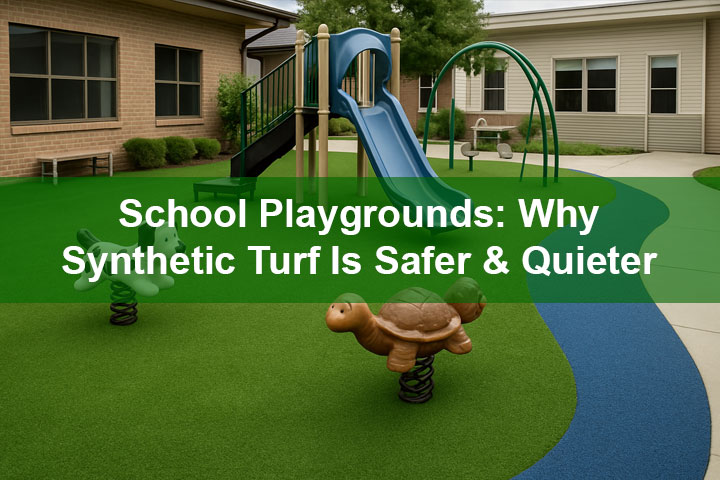
School Playgrounds: Why Synthetic Turf Is Safer & Quieter
School playground turf has become a preferred surface for campuses looking to improve safety, reduce noise, and simplify maintenance. Traditional playground surfaces like natural grass, mulch, or bare dirt often struggle with wear, mud, and uneven impact protection—especially under constant foot traffic. Synthetic turf offers a cleaner, quieter, and more consistent play surface that supports active students while helping schools manage long-term costs.
In this guide, we’ll explore why artificial grass is increasingly used in school playgrounds, how it improves safety and acoustics, and what administrators should consider when planning a turf-based play area.
Related Buy-Grass.com resources:
Artificial Grass Installation |
Artificial Grass for Playgrounds |
Artificial Grass Drainage
Helpful references:
U.S. Consumer Product Safety Commission (Playground Safety) |
ASTM Playground Surface Standards
What You’ll Learn
- Why school playground turf is safer than grass, mulch, or dirt
- How synthetic turf reduces playground noise levels
- Fall protection and shock-absorption considerations
- Drainage and all-weather play benefits
- Maintenance and cost advantages for schools
- Design tips for inclusive and accessible playgrounds
Why Safety Is the Top Priority for School Playgrounds
Playgrounds are designed for movement, exploration, and energy—but with that activity comes risk. Uneven surfaces, muddy patches, and compacted grass can increase the likelihood of slips, trips, and falls. Over time, natural surfaces degrade under daily use, creating hazards that require frequent repair.
School playground turf provides a consistent, level surface that holds its shape year after year. When installed with the proper base and padding system, synthetic turf can meet or exceed fall-height safety requirements for playground equipment.
Impact absorption and fall protection
Modern playground turf systems often include shock pads or cushioned underlayment designed to absorb impact. These systems help reduce injury risk from falls off climbing structures, slides, and play equipment.
- Designed to meet ASTM fall-height standards
- Consistent cushioning across the entire play area
- No shifting or displacement like loose-fill mulch
How Synthetic Turf Creates a Quieter Playground
Noise is an often-overlooked issue on school campuses—especially for classrooms near play areas. Hard surfaces like concrete or asphalt reflect sound, amplifying the noise of running feet, dropped toys, and group play.
School playground turf naturally absorbs sound. The turf fibers, infill, and underlying base layers help dampen impact noise, creating a noticeably quieter environment.
Benefits of reduced playground noise
- Less disruption to nearby classrooms
- More pleasant outdoor supervision environment for staff
- Improved overall campus sound control
This quieter experience is particularly valuable in early education settings, where play areas are often adjacent to learning spaces.
All-Weather Play and Superior Drainage
Natural grass playgrounds quickly turn into mud pits after rain, forcing schools to close play areas or track dirt into buildings. Synthetic turf systems are engineered for drainage, allowing water to move through the surface and base efficiently.
With proper base preparation, school playground turf dries quickly and remains usable shortly after rainfall.
Drainage advantages
- No muddy patches or standing water
- Reduced slips caused by wet soil
- Fewer playground closures after storms
Learn more about drainage planning here:
Artificial Grass Drainage.
Lower Maintenance for Busy School Campuses
Maintaining natural playground surfaces requires constant attention—mowing, reseeding, fertilizing, watering, and repairing worn areas. Loose-fill materials like wood chips need frequent raking and replenishment.
In contrast, school playground turf significantly reduces ongoing maintenance demands.
Maintenance benefits
- No mowing, watering, or fertilizing
- No tracking mud into classrooms
- Consistent appearance throughout the school year
- Lower long-term labor and maintenance costs
For schools managing tight budgets and limited maintenance staff, these savings add up quickly.
Cleaner and More Hygienic Play Areas
Playgrounds see spills, dropped snacks, and plenty of contact with the ground. Synthetic turf does not support pests or organic decay the way natural soil does.
- Does not harbor insects like ants or grubs
- Easy to rinse and clean
- No exposed dirt or mud
This makes turf particularly appealing for elementary schools and early childhood centers where cleanliness matters.
Inclusive and Accessible Playground Design
Accessibility is a major consideration in modern playground design. Loose-fill surfaces can be difficult—or impossible—for wheelchairs, walkers, and mobility devices to navigate.
School playground turf provides a smooth, stable surface that supports inclusive play.
Accessibility advantages
- Firm, even surface for mobility devices
- Better access to play equipment
- Supports inclusive, ADA-conscious design goals
When combined with accessible equipment and thoughtful layout, turf helps ensure that all students can participate in outdoor play.
Design Flexibility for School Playgrounds
Synthetic turf isn’t just functional—it’s also versatile. Schools can customize colors, layouts, and inlaid graphics to create engaging play environments.
- Bright colors for activity zones
- Inlaid hopscotch, numbers, or games
- Clear boundaries between play areas and walkways
These design options allow playgrounds to be both fun and organized, helping staff supervise more effectively.
Long-Term Value and Cost Considerations
While the upfront cost of installing school playground turf may be higher than grass or mulch, the long-term value is often greater.
- Reduced maintenance and water costs
- Fewer repairs due to wear or weather
- Extended usable life compared to natural surfaces
For many schools, the total cost of ownership over time favors synthetic turf.
Final Thoughts
School playgrounds should be safe, welcoming, and functional in all conditions. School playground turf delivers a safer surface, quieter play environment, and lower maintenance demands—making it an increasingly smart choice for modern campuses.
With the right base, padding, and design, synthetic turf helps schools create playgrounds that support active play while protecting students and simplifying operations.
Upgrade Your School Playground with Synthetic Turf
Buy-Grass.com helps schools design safer, quieter playgrounds using high-performance synthetic turf systems. From fall protection to drainage planning, we’ll help you build a playground that works year-round.