
Artificial Grass Face Weight Explained: What It Really Means
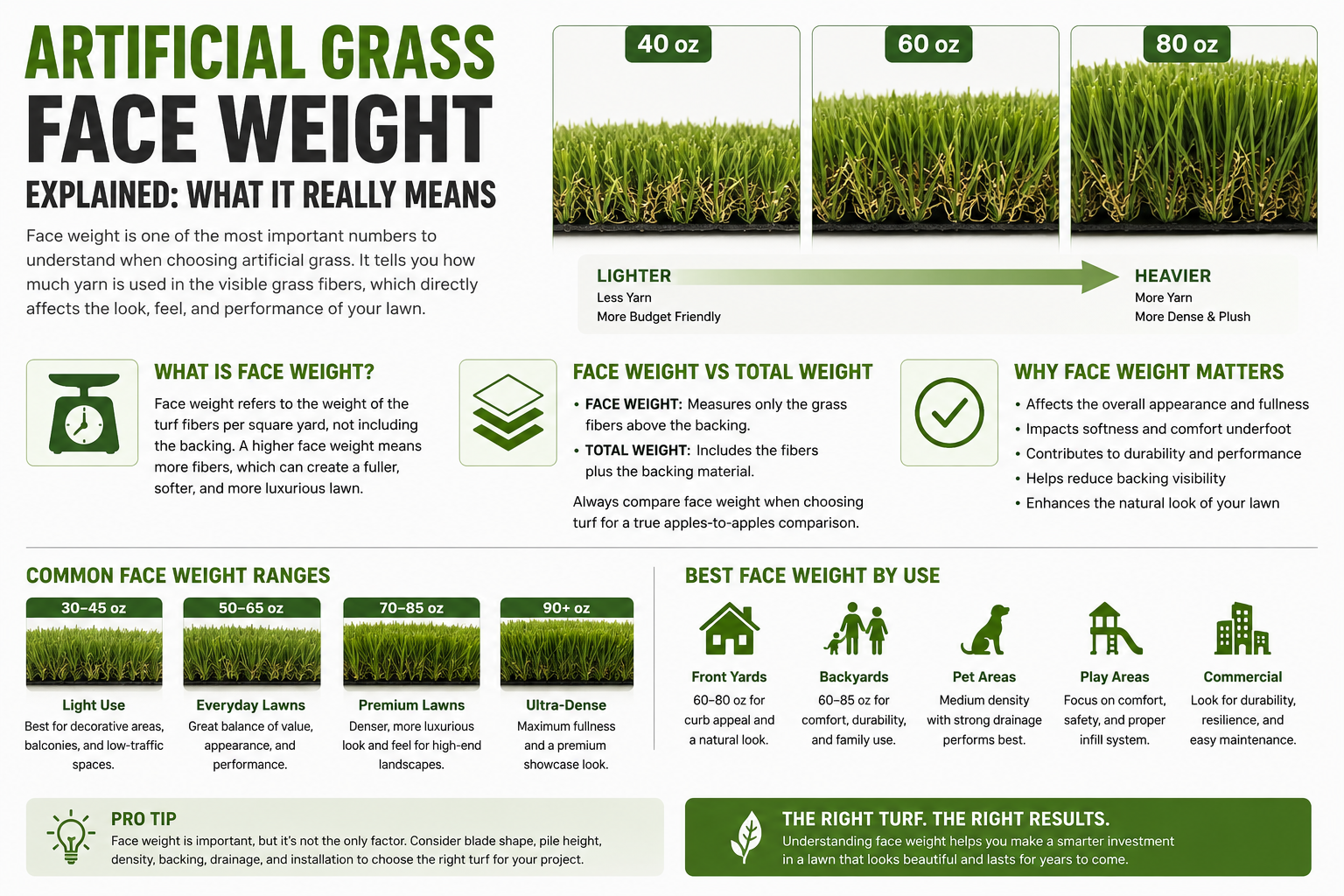
When shopping for synthetic turf, one of the most common product specs you will see is artificial grass face weight. It sounds technical, but the idea is simple: face weight tells you how much yarn is used in the visible grass fibers. In general, a higher face weight can mean a fuller, denser, more luxurious lawn—but it is not the only factor that determines quality.
What You’ll Learn
- What artificial grass face weight actually measures
- Why face weight is different from total product weight
- How face weight affects softness, durability, and appearance
- What face weight is best for lawns, pets, play areas, and commercial spaces
- Why heavier turf is not always the best choice
What Is Artificial Grass Face Weight?
Artificial grass face weight refers to the weight of the turf yarn fibers per square yard, not including the backing. These are the visible blades and thatch fibers that make the turf look and feel like grass.
For example, a turf product with a 70-ounce face weight contains more yarn per square yard than a 40-ounce product. That usually means the turf will look fuller, feel softer, and provide a more premium appearance.
However, face weight does not tell the whole story. Blade shape, pile height, density, backing quality, drainage, infill, and installation all play major roles in how artificial grass performs over time.
Face Weight vs Total Weight
This is where many buyers get confused. Face weight and total weight are not the same thing.
Face Weight
Face weight measures only the synthetic grass fibers above the backing. This is the number most homeowners should pay attention to when comparing how full or lush a turf product may look.
Total Weight
Total weight includes the turf fibers plus the backing material. A product can have a heavier total weight because it has a thicker backing, not necessarily because it has more grass fibers.
When comparing products, always ask whether the listed weight is face weight or total weight. Otherwise, you may think you are comparing two similar products when they are actually very different.
Why Face Weight Matters
Artificial grass face weight matters because it affects the overall appearance, feel, and perceived quality of the lawn. A higher face weight often creates a denser surface with more visual depth.
Appearance
Higher face weight turf usually looks fuller and more natural because there are more fibers packed into each square yard. This can reduce the visibility of the backing and create a richer lawn appearance.
Comfort
More yarn can create a softer feel underfoot, especially when paired with the right blade shape and pile height. This is important for families, patios, poolside areas, and outdoor living spaces.
Durability
Face weight can contribute to durability, but it should not be viewed in isolation. A dense turf with poor yarn quality or weak backing may not perform as well as a slightly lighter product with better engineering.
Common Face Weight Ranges
30–45 Ounces: Light Use
This range is usually best for decorative areas, temporary installations, low-traffic spaces, balconies, or budget-conscious projects. It can look clean and attractive, but it may not feel as full or luxurious as heavier turf.
50–65 Ounces: Everyday Residential Lawns
This is a popular range for many homeowners. It offers a good balance of appearance, comfort, and value. For front yards, side yards, patios, and general landscaping, this range often makes practical sense.
70–85 Ounces: Premium Residential Turf
This range creates a fuller, more upscale look. It is often used for showcase lawns, backyard entertainment areas, and homeowners who want a lush, high-end appearance.
90+ Ounces: Ultra-Dense Turf
Very high face weight turf can look extremely full, but it is not always necessary. In some situations, ultra-dense turf may hold more heat, require more brushing, or be overbuilt for the project.
Is Higher Face Weight Always Better?
No. Higher face weight can be better for certain applications, but it is not automatically the best choice.
For example, pet areas need excellent drainage and odor control. A very dense turf may look beautiful, but if it slows drainage or traps debris, it may not be ideal for dogs. Sports areas may need resilience and ball performance more than a plush lawn feel. Putting greens require a very different construction altogether.
The best turf is the one that matches the use case—not simply the one with the biggest number on the spec sheet.
Best Face Weight by Use Case
Front Yards
For front yards, homeowners often want curb appeal and a natural look. A face weight between 60 and 80 ounces is often a strong choice, depending on budget and design goals.
Backyard Lawns
For family backyards, a 60 to 85-ounce turf can provide a nice balance of softness, density, and durability. If the space gets heavy use, also pay close attention to blade shape and recovery.
Pet Areas
For pet turf, drainage and cleanability matter more than maximum face weight. A medium-density turf with strong drainage may outperform a heavier turf that traps odor and debris.
Play Areas
For children’s play spaces, comfort and safety are important. Face weight matters, but shock pads, infill choice, and installation quality are also major factors.
Commercial Landscapes
Commercial areas often need durability and easy maintenance. A medium-to-high face weight product with resilient blades may be better than an ultra-soft product designed mainly for appearance.
Other Specs to Compare Alongside Face Weight
To choose the right artificial grass, compare face weight with these other important specs:
- Pile height: The length of the grass blades
- Blade shape: The cross-sectional design of each blade
- Density: How closely the stitches are packed together
- Backing: The material that holds the turf together
- Drainage rate: How quickly water moves through the turf
- Thatch: The shorter curled fibers that add realism and support
- Warranty: The manufacturer’s coverage for fading and defects
Common Face Weight Mistakes
Choosing the Heaviest Turf Automatically
A heavier turf may look impressive, but it may not be right for pets, sports, slopes, drainage-heavy areas, or tight budgets.
Ignoring Total System Design
Artificial grass is not just the turf roll. Base preparation, drainage, infill, seams, edging, and installation technique all affect the final result.
Comparing Samples Without Asking for Specs
Two samples may look similar in your hand, but their face weight, backing, stitch rate, and yarn quality may be very different.
Forgetting About Maintenance
Denser turf can require occasional brushing to keep fibers upright, especially in high-traffic areas.
How to Compare Artificial Grass Samples
When reviewing turf samples, do more than look at color. Run your hand through the fibers. Bend the sample to inspect the backing. Part the blades and see how visible the backing is. Compare softness, density, blade recovery, and thatch color.
Most importantly, think about where the turf will be installed. A beautiful sample for a front yard may not be the best option for a dog run. A plush backyard turf may not be right for a putting green. The intended use should guide the product choice.
Final Thoughts
Artificial grass face weight is one of the most helpful specs to understand when comparing synthetic turf. It gives you a sense of how much yarn is used in the visible grass fibers and can help predict fullness, softness, and visual quality.
But face weight should never be the only number you consider. The best artificial grass product is the one that balances face weight with blade shape, pile height, drainage, backing quality, and your specific use case.
Need Help Choosing the Right Turf?
Buy-Grass.com can help you compare artificial grass options based on your project, budget, pets, foot traffic, and design goals.