Artificial Grass Blade Shapes: The Ultimate Guide to Choosing the Right Turf
When selecting synthetic turf, one of the most important (and often overlooked) factors is blade shape. Understanding turf blade shape helps you choose artificial grass that looks realistic, performs well, and matches your specific use case—whether it’s a backyard, pet area, playground, or putting green. This guide is your complete, one-stop resource for everything you need to know about blade shapes and how they impact durability, comfort, and appearance.
What Is Turf Blade Shape?
Turf blade shape refers to the cross-sectional design of each individual grass blade. Instead of being flat like early artificial turf, modern blades are engineered into specific shapes to improve resilience, reduce shine, and enhance realism.
Blade shape directly impacts:
- How well the grass springs back after being stepped on
- How natural it looks under sunlight
- How comfortable it feels underfoot
For a full system overview, see our artificial grass installation guide.
Why Turf Blade Shape Matters
Choosing the right turf blade shape is essential for long-term satisfaction. Different shapes are engineered for different performance goals.
- Durability: Some shapes resist flattening better
- Comfort: Softer blades are better for lounging areas
- Realism: Multi-dimensional shapes mimic natural grass
According to the Turfgrass Producers International, modern turf engineering focuses heavily on blade structure to improve performance.
Common Artificial Grass Blade Shapes
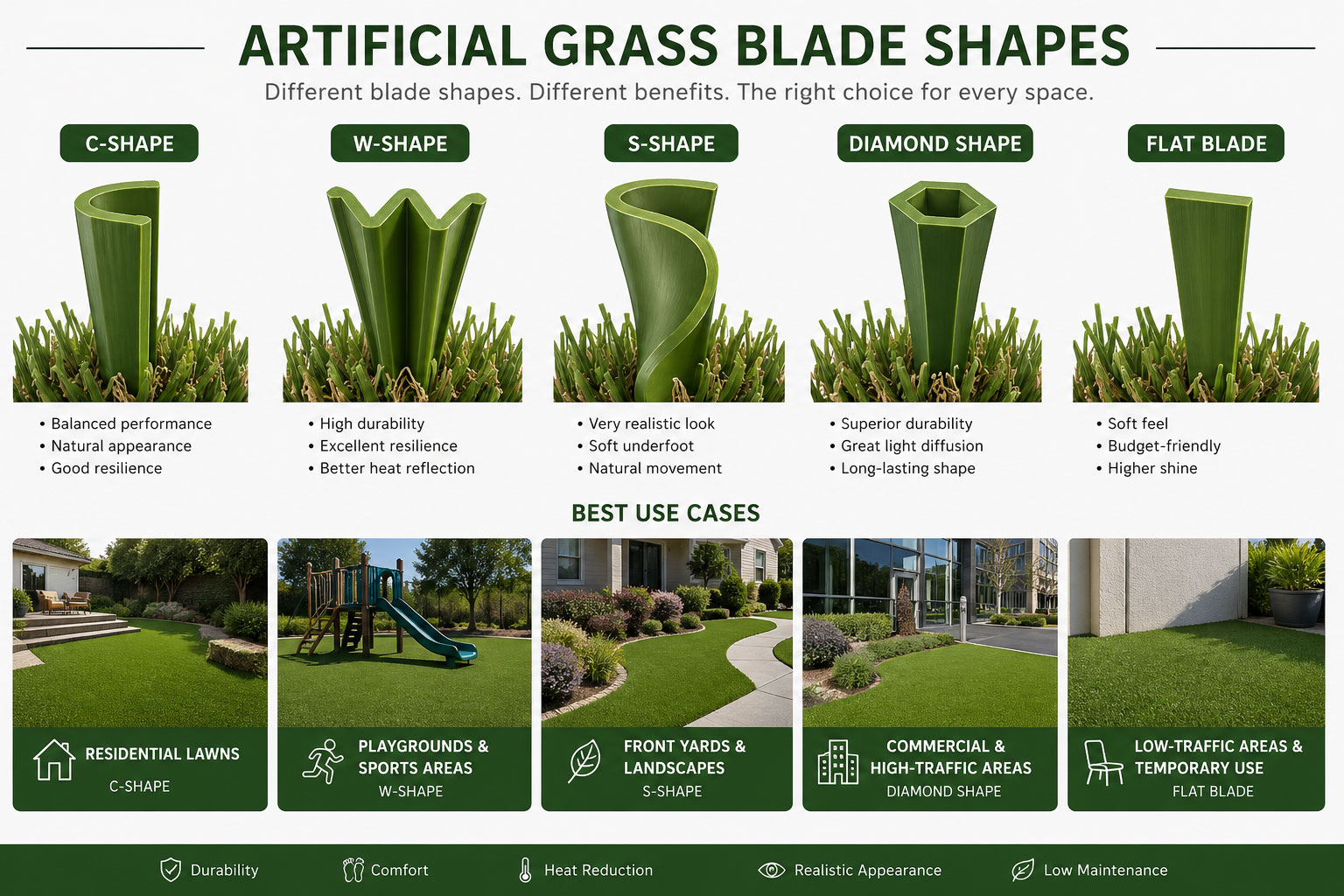
1. C-Shaped Blades
C-shaped blades are one of the most common and balanced designs in artificial turf.
- Moderate durability
- Natural appearance
- Good all-purpose performance
Best Use Cases
- Residential lawns
- Light to moderate foot traffic areas
2. W-Shaped Blades
W-shaped blades are engineered for strength and heat reduction.
- High durability
- Improved light reflection (cooler surface)
- Enhanced resilience
Best Use Cases
- Playgrounds
- Sports areas
- High-traffic yards
3. S-Shaped (Wave) Blades
S-shaped blades are designed to mimic the natural curvature of real grass.
- Very realistic look
- Soft feel
- Moderate durability
Best Use Cases
- Front yards
- Decorative landscapes
4. Diamond-Shaped Blades
Diamond-shaped blades offer a balance of structure and aesthetics.
- High resilience
- Good light diffusion
- Long-lasting appearance
Best Use Cases
- Commercial landscapes
- Heavy-use residential areas
5. Flat Blades
Flat blades are the simplest design and are often used in budget-friendly turf.
- Soft feel
- Lower durability
- Higher shine under sunlight
Best Use Cases
- Low-traffic areas
- Temporary installations
How Turf Blade Shape Affects Performance
Durability and Resilience
Structured shapes like W and diamond blades provide better resistance to flattening. Choosing the right turf blade shape ensures your lawn maintains its appearance over time.
Comfort and Feel
Softer shapes like S and flat blades are more comfortable for barefoot use, making them ideal for relaxation areas.
Heat Management
Some blade designs reflect sunlight more effectively, reducing surface temperatures. This is especially important in hot climates.
Appearance and Realism
Multi-dimensional shapes create a more natural look by diffusing light and reducing glare.
Choosing the Right Turf Blade Shape for Your Project
For Families and Backyards
Choose a combination of comfort and durability. C-shaped or S-shaped blades are excellent options.
For Pet Areas
Durability and drainage are key. W-shaped blades are often the best choice.
Learn more in our pet-friendly artificial grass guide.
For Commercial Spaces
High-traffic areas benefit from diamond or W-shaped blades for maximum resilience.
For Aesthetic Landscapes
If appearance is your top priority, S-shaped blades provide the most natural look.
Combining Blade Shapes
Many premium turf products combine multiple turf blade shape designs to maximize performance and realism. This hybrid approach delivers:
- Improved durability
- Enhanced softness
- More natural color variation
Common Mistakes to Avoid
- Choosing based on price alone
- Ignoring foot traffic requirements
- Overlooking climate considerations
- Not testing samples before purchase
Final Thoughts
Understanding turf blade shape is essential for selecting the right artificial grass. Each shape offers unique benefits, and the best choice depends on how you plan to use your space. By considering durability, comfort, and realism, you can confidently choose a turf product that meets your needs and delivers long-lasting performance.
Need Help Choosing the Right Turf?
Explore premium artificial grass options and get expert guidance tailored to your project at Buy-Grass.com.