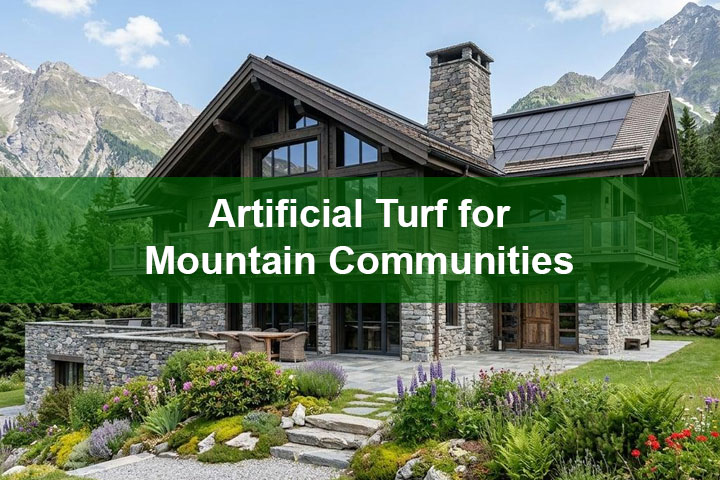
Artificial Turf for Mountain Communities: What Homeowners Should Know
The 60-Second Answer
Artificial grass can be an excellent landscaping option for mountain homes, but choosing the right turf is only half the job.
Successful mountain artificial turf installations require careful planning for snow accumulation, freeze-thaw cycles, spring runoff, uneven terrain, and seasonal maintenance.
Most quality synthetic grass fibers can tolerate ordinary winter exposure. The bigger concern is often what happens underneath the lawn when water freezes, snow melts, or an unstable base begins to shift.
Our recommendation: Choose turf suitable for your climate, but spend at least as much attention on base construction, drainage, slope stability, and snow removal requirements. For steep or unstable sites, involve a qualified professional before installation.
Why Mountain Landscaping Is Different
A lawn in a mountain community faces a different set of challenges from one in a typical suburban neighborhood.
Depending on elevation and location, homeowners may experience deep winter freezes, heavy snowfall, strong winds, rapid snowmelt, rocky soil, and significant changes in temperature between seasons.
Even neighboring properties can behave differently. A sunny south-facing yard may thaw weeks before a shaded north-facing landscape.
That matters because artificial grass is installed as a complete system. The synthetic fibers sit above backing, infill where specified, a prepared base, and the underlying soil.
If water becomes trapped in that system or the ground shifts repeatedly, the visible turf can develop wrinkles, uneven areas, or drainage problems.
For mountain homeowners, we would evaluate the land before choosing the product.
At a Glance: Mountain Conditions and Turf Performance
| Mountain Condition | Potential Problem | Our Recommendation |
|---|---|---|
| Heavy Snow | Temporary loss of yard access | Allow natural melting where practical |
| Freeze-Thaw Cycles | Base movement and uneven surfaces | Evaluate soil and drainage conditions |
| Spring Snowmelt | Pooling, erosion, or runoff | Provide effective drainage and outlets |
| Steep Slopes | Erosion, shifting, and difficult anchoring | Use site-specific slope design |
| Pine Needles and Debris | Accumulation within turf fibers | Plan routine debris removal |
| Vacation Property | Limited maintenance between visits | Design for simple inspections and upkeep |
Buy-Grass assessment: Mountain artificial turf can work well on appropriately prepared sites. The most demanding projects are usually those combining steep slopes, poor drainage, and significant seasonal freezing.
Can Artificial Grass Survive Snow and Freezing Temperatures?
Generally, yes. Modern synthetic turf is commonly used in environments that experience snow and freezing conditions.
The fibers do not die or become dormant like living grass, and ordinary snow cover does not automatically require the lawn to be replaced.
However, cold temperatures can temporarily change how the surface behaves.
Frozen Turf Can Feel Harder
When moisture within the turf or infill freezes, the surface may become less flexible and less comfortable underfoot.
Heavy activity on frozen turf may also place additional stress on the fibers, particularly when they are stiff or covered with ice.
Snow Usually Does Not Need Immediate Removal
For many residential properties, the easiest approach is to leave snow in place until it melts naturally.
Commercial synthetic turf maintenance guidance also generally favors natural melting when immediate use is unnecessary.
For further information, see SIS Pitches' winter synthetic turf maintenance guidance.
Ice Creates a Different Problem
A frozen surface can become slippery, especially when meltwater refreezes overnight.
Do not assume artificial grass provides reliable traction when covered with ice.
If your family needs year-round access to a doorway, stairs, or frequently traveled path, a separate walkway designed for winter conditions may be the better solution.
Buy-Grass Pro Tip
If your mountain property receives regular snowfall, don't design artificial grass as the primary winter walking surface. Use appropriate hardscape for essential access routes and treat the lawn as a seasonal outdoor living area.
The Real Challenge: Freeze-Thaw Cycles
One of the most important concerns for mountain landscaping occurs below the turf.
When water freezes within susceptible soil, the ground can expand or experience frost heave. As temperatures rise, thawing may leave saturated or weakened material behind.
Repeated cycles can contribute to uneven surfaces and movement in poorly designed installations.
The risk depends on soil type, available moisture, freezing depth, drainage, and site conditions.
Fine-grained soils may be particularly susceptible when water and freezing temperatures occur together.
For mountain artificial turf, this means the base must be selected for the local climate rather than copied from an installation specification used in a warm-weather neighborhood.
A contractor familiar with local frost conditions should evaluate excavation depth, drainage, aggregate selection, compaction, and the need for additional measures.
The Caltrans Geotechnical Manual discusses the effects of groundwater, surface runoff, and freeze-thaw activity on soil slopes.
Drainage Matters More Than Annual Rainfall
Mountain homeowners sometimes assume that turf drainage is primarily a concern in rainy climates.
However, snowmelt can produce substantial runoff over a relatively short period, especially when temperatures rise quickly or rain falls on existing snow.
If the underlying soil remains frozen, water may be unable to infiltrate at its normal rate.
That can create temporary pooling, saturated soil, or concentrated runoff.
Start with Where the Water Goes
A turf product may have excellent laboratory drainage specifications, but those numbers mean little if the underlying base cannot move water away.
Before installing artificial grass, identify:
- Where snow accumulates
- Where meltwater naturally flows
- Whether the soil becomes saturated
- Whether runoff crosses retaining walls or pathways
- Where drainage outlets will discharge
- Whether runoff could affect foundations or neighboring properties
In some locations, a carefully engineered drainage system may be more important than selecting the most expensive turf product.
Never direct concentrated runoff toward a slope or neighboring property without confirming that the drainage arrangement is appropriate.
Artificial Grass on Mountain Slopes
Sloped mountain properties create some of the most attractive landscaping opportunities, but they also require additional care.
Artificial grass can provide a neat appearance on certain slopes where natural grass is difficult to maintain.
However, turf is not a substitute for erosion-control engineering or slope stabilization.
On a steep site, the entire installation must account for the movement of water, underlying soil stability, edge restraint, and the possibility of surface movement.
When a Slope Needs Professional Assessment
We would seek qualified professional guidance when the property has:
- Steep or unstable terrain
- Existing erosion or soil movement
- Retaining walls showing signs of distress
- Significant groundwater seepage
- Concentrated seasonal snowmelt
- Proposed turf near a building foundation
For some locations, native vegetation, erosion-control planting, or an engineered hardscape may be more appropriate than synthetic grass.
Choosing the Right Turf for Mountain Homes
There is no single pile height, backing material, or fiber specification that works best for every mountain property.
We would evaluate the actual application before choosing a product.
For Cabin Front Yards
Realistic color, moderate pile height, and manageable maintenance are often more important than maximum softness.
A natural-looking lawn can complement wood siding, stone pathways, and surrounding trees without competing visually with the mountain landscape.
For Family Recreation Areas
Select turf based on foot traffic, fiber resilience, comfort, and the construction of the complete surface system.
Remember that frozen turf may temporarily feel harder and should not be treated as a substitute for an appropriately designed safety surface.
For Vacation Rentals
Consider products that can withstand repeated guest use and are easy to inspect and clean between visits.
Avoid unusually complicated installations that require specialized maintenance every time the property changes occupants.
For Pet Areas
Drainage and cleaning remain essential, especially during periods when snow and frozen ground limit normal water movement.
For a dog relief area used throughout winter, consider whether a smaller, accessible surface with dedicated drainage would be more practical than a large turf lawn.
Learn more about turf selection in our Pile Height vs. Performance guide.
How to Remove Snow Without Damaging Your Turf
For most decorative or residential turf areas, allowing snow to melt naturally is generally preferable.
When access is necessary, use methods approved by your turf manufacturer.
Depending on snow conditions, a plastic shovel used carefully above the turf surface may be appropriate. Avoid aggressive scraping against the blades and seams.
Do not use metal-edged tools directly against the turf backing or frozen fibers.
Rock salt and chemical deicers should not be applied without checking their compatibility with the entire turf system, including backing, infill, pets, and nearby vegetation.
Similarly, pouring very hot water onto frozen turf can create refreezing hazards and may damage certain components.
If the area is heavily iced over, the safest option may be to temporarily restrict access until conditions improve.
Pine Needles, Wildlife, and Mountain Maintenance
Mountain landscapes can accumulate more than snow.
Pine needles, cones, branches, windblown leaves, and seasonal debris can collect on synthetic grass.
Regular removal helps maintain appearance and prevent organic material from building up between the fibers.
A leaf blower or compatible synthetic-bristle brush can work well when the lawn is dry and unfrozen.
Wildlife can also create unexpected problems. Burrowing animals may disturb the underlying soil, while larger animals can damage exposed edges or landscaping features.
Properties in wildfire-prone mountain communities deserve additional planning. Synthetic turf is not a substitute for required defensible space, and combustible landscape materials near buildings must be considered carefully.
Review local fire regulations and guidance before installing artificial turf near structures.
Buy-Grass Pro Tip
If your mountain home sits beneath mature pines, think about how you will remove needles, cones, and branches before choosing the turf layout. A smaller lawn with easy maintenance access may be more practical than a large decorative installation.
Artificial Turf vs. Natural Grass for Mountain Properties
| Consideration | Artificial Turf | Natural Grass |
|---|---|---|
| Growing season | No growing season required | May be short at higher elevations |
| Irrigation | No growth irrigation | Depends on climate and grass type |
| Snow cover | Can remain covered until thaw | Dormant beneath snow |
| Freeze-thaw concerns | Base and drainage design are critical | Soil and plant health may be affected |
| Maintenance | Debris removal, grooming, inspections | Mowing, irrigation, fertilization, seasonal care |
| Ecological value | Does not provide living vegetation | Living plant and soil ecosystem |
Buy-Grass assessment: Artificial turf can be appropriate for small, heavily used mountain lawns and vacation properties. Natural grass or climate-appropriate native landscaping may be preferable when living vegetation, cooling, or ecological benefits are higher priorities.
Things We Wish Every Mountain Homeowner Knew
1. Snow usually isn't the biggest risk.
Poor drainage and freeze-thaw movement beneath the turf may create more significant long-term problems.
2. An installation designed for Los Angeles may not be appropriate for Big Bear.
Mountain soil, frost depth, runoff, and exposure require location-specific decisions.
3. A green lawn does not guarantee winter accessibility.
Frozen artificial grass can still become hard and slippery.
4. Slopes need more than additional nails.
Erosion, water movement, and soil stability must be addressed before securing turf.
5. Some mountain properties don't need a lawn at all.
Native landscaping, stone paths, mulch, and carefully placed seating areas may better suit the terrain and local conditions.
Common Installation and Maintenance Mistakes
Using a Warm-Climate Base Design
Local freezing depth, soil conditions, and drainage requirements should influence base construction.
Ignoring Snowmelt Runoff
A lawn that drains adequately in summer may experience temporary pooling when the ground remains frozen.
Installing Turf on an Unstable Slope
Artificial grass cannot correct underlying erosion or structural soil problems.
Scraping Snow with Metal Tools
Aggressive snow removal can damage fibers, backing, or seams.
Expecting Zero Maintenance
Even a mountain vacation home requires occasional inspections, debris removal, and seasonal care.
Before You Buy: Mountain Turf Checklist
Before installing artificial turf at a mountain property, ask:
- What are the site's winter freezing conditions?
- Does snow accumulate heavily in this location?
- Where will spring snowmelt drain?
- Is the soil rocky, clay-heavy, or prone to movement?
- Does the site have steep or unstable slopes?
- Is the proposed base suitable for local frost conditions?
- How will turf seams and edges be secured?
- What snow removal methods does the manufacturer allow?
- Are there local wildfire or defensible-space requirements?
- Who will maintain the lawn when the home is unoccupied?
- Does the warranty cover the intended climate and installation?
Our Recommendation
If we were installing artificial grass at a mountain property, we would begin by identifying exactly how the space will be used.
For a relatively flat cabin yard with appropriate drainage, quality artificial turf could provide a practical, attractive outdoor area with less growing-season maintenance than natural grass.
For a steep hillside, poorly drained site, or area experiencing significant frost-related movement, we would invest in professional site evaluation before selecting a turf product.
We would also consider keeping essential winter pathways separate from the lawn and incorporating native plants, stone, and other materials that complement the mountain setting.
We would not automatically purchase the most expensive or thickest synthetic turf. Instead, we would look for documented product performance, a climate-appropriate base, reliable drainage, and a maintenance plan suited to the property.
The best mountain artificial turf installation is one designed for the conditions beneath it, the weather above it, and the way the homeowner actually uses the space.
Continue Learning
- Pile Height vs. Performance
- Artificial Grass Blade Shapes
- Artificial Grass Face Weight Explained
- Explore More Artificial Grass Buying Guides
Planning Artificial Turf for a Mountain Home?
Mountain properties require landscaping solutions that account for seasonal weather, drainage, soil conditions, and long-term maintenance.
At Buy-Grass.com, our independent guides help homeowners compare artificial grass materials, understand installation requirements, and evaluate practical alternatives.
Choose a landscape that works with your environment—not against it.